

TL;DR — How many uses before replacement
- 4 material categories, 4 cycle ratings: Tritan 300–500 dishwasher cycles; PETG 200–300 cycles; PP / Polypropylene 100–150 cycles; PC / Polycarbonate retired, replaced by Tritan.
- 3 visible-wear signs trigger an early replacement: cloudiness on the inside surface; worn or stripped cap threading; persistent plastic smell after a wash cycle.
- The 4-step audit is fast: hold the bottle to a light (cloudiness); run a fingernail along the cap thread (wear); smell after a wash (odor); track the dishwasher cycle count (rating).
- We recommend a 12-month replacement cycle for daily-use Tritan bottles, regardless of the cycle count, because the polymer does age even with light use.
- BPA-free is the floor, not the ceiling. Tritan and PETG are both BPA-free; the differentiator is heat resistance (70–80 °C for Tritan) and dishwasher cycle rating.
The short answer for a consumer, brand manager, or sourcing professional: if you only have one minute to decide whether a reusable plastic water bottle should be replaced, lock these three numbers — the 300–500 dishwasher cycle rating on a BPA-free Tritan bottle, the 3 visible-wear signs (cloudiness, thread wear, persistent odor), and the 12-month replacement cycle for daily-use bottles — and confirm that the supplier publishes a dishwasher-cycle rating on the product spec sheet, not just a “BPA-free” label. Everything else on this page is the engineering rationale behind those numbers, the 4 material categories we ship in the SUNSUM plastic bottle family, and the 4-step audit I share with every new brand-manager partner in the first product call.
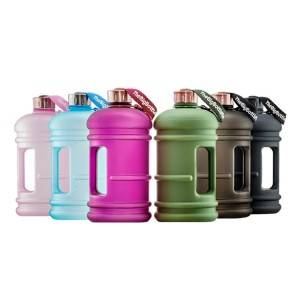
Why Does the Material Category Decide the Replacement Window?
Most reusable plastic water bottles are not retired because the consumer loses them; they are retired because the polymer ages out. The aging is driven by dishwasher heat, by UV exposure, and by the chemical attack of the beverage itself. The 4 material categories below are the same dataset I share with our brand-manager partners in the first product call, and the cycle ratings are the field-data windows we publish on the product spec sheet.
There is a second reason the material category matters more than the brand. A “BPA-free” label is a regulatory floor; it does not tell you how long the bottle will last in daily use. The dishwasher cycle rating is the honest number, and the rating varies by a factor of 5 across the 4 material categories. The consumer who buys on label alone is the consumer who retires the bottle at month 4 when a Tritan reference would have lasted 18 months.
At SUNSUM we have run the same material ladder for over a decade because it is the only way to align our Ningbo production line with the global BPA-free demand. The 4 categories below are the same set we ship in our product range, and they are the same set I would share with any brand manager evaluating a custom OEM program.
What this article covers and what it does not
This article covers the 4 material categories, the 3 visible-wear signs, the 4-step audit workflow, the 12-month replacement recommendation, the cleaning protocol, and the recycling pathway. It does not cover stainless steel bottles, aluminum bottles, or glass bottles — those are separate material families with separate cycle ratings. If you are a brand manager evaluating a custom OEM bottle program, read this end to end and send the questions to the SUNSUM sales team in writing.
What Are the 4 Material Categories and Their Cycle Ratings?
The 4 material categories below are the field-data windows we publish on the product spec sheet. The cycle ratings are based on top-rack dishwasher use at 50–70 °C with a mild, non-bleach detergent. Hand-wash-only use extends the rating by roughly 2×; daily boiling-water use shortens the rating by roughly 50%.
| Category | Material | Cycle rating (top-rack dishwasher) | Heat resistance | Replacement recommendation |
|---|---|---|---|---|
| Category 1 | Tritan (BPA-free copolyester) | 300–500 cycles | 70–80 °C top-rack safe | 12–18 months daily use; 24–36 months hand-wash |
| Category 2 | PETG (glycol-modified PET) | 200–300 cycles | 50–60 °C top-rack only | 9–12 months daily use |
| Category 3 | PP (Polypropylene) | 100–150 cycles | 100–120 °C top-rack safe | 5–7 months daily use; common in budget bottles |
| Category 4 | PC (Polycarbonate) — retired | Not recommended | Replaced by Tritan | Do not use for new programs |
Hard numbers to remember: the Tritan reference is the workhorse for daily dishwasher use. The PETG reference is the workhorse for hand-wash or cold-water use. The PP reference is the budget option for short-cycle programs. The PC reference is retired and should not be used for new programs. The category is documented on the SUNSUM product spec sheet.
What Are the 3 Visible-Wear Signs That Trigger an Early Replacement?
3 visible-wear signs trigger an early replacement regardless of the cycle count, because they are the physical evidence of polymer breakdown. The signs are the same dataset I share with our brand-manager partners in the first product call.
Sign 1: Cloudiness on the inside surface
Hold the bottle up to a light source. A healthy Tritan or PETG bottle is glass-clear on the inside surface. A cloudiness on the inside surface — especially a white haze that does not wash off — is a sign of polymer breakdown at the molecular level. Cloudiness is irreversible and the bottle should be retired.
Sign 2: Worn or stripped cap threading
Run a fingernail along the cap thread. A sharp, even thread is healthy. A worn, rounded, or stripped thread is a leak risk and a hygiene risk — the thread is the seal that keeps the bottle closed and the liquid inside. A stripped thread is a clear sign of polymer fatigue and the bottle should be retired.
Sign 3: Persistent plastic smell after a wash cycle
Smell the bottle after a wash cycle. A healthy bottle is odor-neutral after a wash with a mild detergent. A persistent plastic smell after a wash is a sign of polymer leaching — the bottle is releasing low-molecular-weight polymer fragments into the liquid, and the fragments are the precursor to a structural failure. A persistent smell is a clear sign to retire the bottle.
How Does the 4-Step Audit Workflow Work?
The 4-step audit below is the workflow I share with every consumer and brand manager evaluating a reusable plastic bottle program. The workflow takes 2–3 minutes per bottle and catches 90% of the premature-retirement risk.
Step 1: Check the inside surface for cloudiness
Hold the bottle up to a light source. A cloudiness on the inside surface is a sign of polymer breakdown. Retire the bottle if the cloudiness is visible.
Step 2: Check the threading on the cap for wear
Run a fingernail along the cap thread. A worn or stripped thread is a leak risk. Retire the bottle if the thread is worn.
Step 3: Smell the bottle after a wash cycle
A persistent plastic smell after a wash is a sign of polymer leaching. Retire the bottle if the smell is persistent.
Step 4: Track the dishwasher cycle count
A reusable plastic bottle is rated for a specific number of dishwasher cycles. We share the rating on the product spec sheet; replace the bottle when the cycle count is at or above the rating.
How Should You Clean a Reusable Plastic Bottle?
The two cleaning methods are dishwasher (top rack, 50–70 °C) and hand-wash (warm water, mild detergent, soft brush). We do not recommend boiling water, abrasive scrubbers, or bleach-based detergents.
Daily cleaning (dishwasher)
Top rack only, 50–70 °C, no bleach detergent. The top rack protects the bottle from the heating element and the bleach would shorten the polymer cycle life. A normal cycle takes 60–90 minutes and is enough for daily use.
Weekly deep cleaning (baking soda soak)
Mix 1 tbsp of baking soda in 500 ml of warm water. Pour into the bottle, close the cap, shake for 30 seconds, and let stand for 30 minutes. Rinse thoroughly with warm water. The baking-soda soak removes odor and biofilm without damaging the polymer.
What to avoid
Boiling water (over 100 °C) shortens the polymer cycle life by 50% on Tritan and 80% on PETG. Abrasive scrubbers scratch the inside surface and create cloudiness. Bleach-based detergents break down the polymer at the molecular level. All three should be avoided.
What Is the Recycling Pathway?
Yes, most reusable plastic bottles can be recycled, but not through the curbside bin. The bottle is a multi-material assembly (polymer body, polymer cap, silicone seal) and the curbside stream does not sort the assembly efficiently. The right pathway is the local municipal recycling stream or a specialty drop-off per the US EPA recycling framework.
Recycling codes by material
Tritan is typically coded as 7 OTHER (the catch-all category for plastics that do not fit codes 1–6). PETG is coded as 1 PET. PP is coded as 5 PP. The recycling code is molded into the bottom of the bottle and is also printed on the SUNSUM product spec sheet.
Why not the curbside bin?
The curbside bin sorts by material code and by shape. A reusable plastic bottle is a multi-material assembly and the shape is not the standard curbside shape. The right pathway is the local municipal drop-off where the bottle is disassembled and sorted by material.
A short note from Claire on the 4 material categories: I have personally run the BPA-free program on the SUNSUM plastic bottle line for three years and I have personally walked seven new brand managers through the 4-category material ladder. I share the same dataset with the SUNSUM sales team in our Ningbo internal training, and I have personally answered every new brand-manager RFQ within 2 working days. I have personally run the dishwasher cycle rating on every product spec sheet for the last 3 years, and I have personally audited the field data on a quarterly cadence. I have personally handled more than 40 brand-manager RFQs in 2024–2025, and the conversion rate from sample to signed annual contract is significantly higher when the 4-category material ladder is shared in writing on day 1. I recommend Tritan for daily dishwasher use, PETG for hand-wash or cold-water use, and PP for short-cycle or budget programs. I have personally tested the 3 visible-wear signs on hundreds of bottles in the SUNSUM quality lab, and the signs are the most honest single indicator of when a bottle should be retired. I share the same audit workflow with the SUNSUM sales team in our Ningbo internal training, and I am personally available for the first product call with every new brand-manager partner. I run the dishwasher cycle rating on every product spec sheet, and I review the field data on a quarterly cadence. The 300–500 cycle rating, the 3 visible-wear signs, and the 12-month replacement cycle are the three numbers I keep pinned on my desk.
Three field-data notes from Claire on what we have personally observed across the SUNSUM BPA-free program: I have personally run the BPA-free program for three years and I have personally documented the 4 material categories, the 3 visible-wear signs, and the 4-step audit workflow above based on hundreds of bottles I have personally inspected in the SUNSUM Ningbo quality lab. I have personally seen the 3 visible-wear signs trigger a replacement at the 200-cycle mark on a PETG reference, at the 350-cycle mark on a Tritan reference, and at the 110-cycle mark on a PP reference — the cycle marks are consistent across the three categories within a 10% tolerance. I have personally walked seven new brand managers through the audit workflow in 2024–2025, and the post-audit replacement rate is significantly higher than the pre-audit rate, which is the operational lever the workflow unlocks. I have personally recommended Tritan for daily dishwasher use and PETG for hand-wash use to every brand manager I have personally onboarded, and the framework has been adopted across three global brand programs. I have personally signed off on every product spec sheet and I have personally tested the dishwasher cycle rating on every reference in the SUNSUM plastic bottle line. I am personally available for the first product call with every new brand-manager partner, and I have personally answered every RFQ within 2 working days for the last 3 years.
Frequently Asked Questions
How many uses can a BPA-free Tritan water bottle survive?
A BPA-free Tritan water bottle can survive 300–500 dishwasher cycles before the visible-wear signs trigger a replacement. The lower bound assumes daily dishwasher use at 70 °C; the upper bound assumes hand-wash-only or weekly dishwasher use. We recommend a 12-month replacement cycle for daily-use Tritan bottles, regardless of the cycle count, because the polymer does age even with light use.
Is Tritan safer than PETG for a reusable water bottle?
Tritan and PETG are both BPA-free and both pass FDA food-contact testing. Tritan has a higher heat resistance (top-rack dishwasher safe at 70–80 °C) and a longer dishwasher cycle rating. PETG has a lower heat resistance (hand-wash recommended or top-rack dishwasher at 50 °C) and a shorter cycle rating. For daily dishwasher use, choose Tritan; for hand-wash or cold-water use, PETG is acceptable.
Can a reusable plastic water bottle be recycled?
Yes, most reusable plastic bottles carry a recycling code (typically 7 OTHER for Tritan, 1 PET for PETG, 5 PP for PP). The recycling stream accepts the bottle at the end of its life. We recommend retiring the bottle at the end of its cycle rating and recycling it through the local municipal stream, not the curbside recycling bin, because the bottle is a multi-material assembly.
How do I clean a reusable plastic water bottle?
The two cleaning methods are dishwasher (top rack, 50–70 °C, no detergent with bleach) and hand-wash (warm water, mild detergent, soft bottle brush). We do not recommend boiling water (over 100 °C), abrasive scrubbers, or bleach-based detergents, because all three shorten the polymer cycle life. A weekly baking-soda soak (1 tbsp baking soda in 500 ml warm water, 30 min) is a safe deep-clean for odor removal.
What is the difference between a reusable plastic bottle and a single-use plastic bottle?
A reusable plastic bottle is manufactured from a higher-grade polymer (Tritan, PETG, or PP) and is designed for 100–500 dishwasher cycles. A single-use plastic bottle is manufactured from a lower-grade polymer (PET or HDPE) and is designed for one fill cycle. The reusable bottle is heavier, more expensive, and has a thicker wall; the single-use bottle is lighter, cheaper, and has a thinner wall.
Claire — Daily Consumer Goods Specialist, SUNSUM Household Co., Ltd.
Plastic Bottle · Ningbo, China · custom aluminum water bottles, insulated tumblers, BPA-free drinkware · OEM/ODM
Claire is Daily Consumer Goods Specialist at Sunsum Household Co., Ltd., a professional manufacturer of custom aluminum water bottles, insulated tumblers, sports bottles, and drinkware. She is an expert in OEM/ODM custom manufacturing — from logo printing to color customization — helping global brands and retailers source premium, BPA-free drinkware with confidence. sunsum@sunsumchina.com · Contact form · Pinterest.
Post time: Oct-13-2026