
Whether you are sourcing a private-label beverage program for the first time or auditing an existing supplier, the choice between aluminum and stainless steel is not a matter of taste — it is a chain of engineering, cost, and supply-chain decisions. This guide collects the 17 facts that drive that decision, drawn from Sunsum China’s production lines and the underlying material science.
1. Why Material Choice Matters for OEM/ODM Buyers
The “aluminum vs stainless steel” question appears in roughly 70% of Sunsum China’s new-buyer consultations. The materials look similar on a retail shelf — both are silver-toned, both can carry a custom logo, both are BPA-free when correctly specified. But the supply chain, unit economics, and end-customer experience differ in measurable ways that ripple through to your landed cost, your marketing claims, and your compliance documentation.
This article uses industry-standard reference data, drawn from the Aluminum Association (aluminum recyclability and material properties) and the AZoM engineering database (304 stainless steel properties), cross-referenced against Sunsum’s internal production data. Numbers marked “Sunsum measurement” reflect actual 2025–2026 production batches; numbers marked “industry-standard reference” reflect commonly cited engineering figures that buyers should validate against the specific supplier’s documentation.
2. Material Science Basics — Aluminum 1100/3003 vs 304 Stainless Steel
| Property | Aluminum 1100 / 3003 | 304 Stainless Steel |
|---|---|---|
| Density | 2.71 g/cm³ | 8.00 g/cm³ |
| Thermal conductivity | ~205 W/(m·K) | ~16 W/(m·K) |
| Yield strength | ~75 MPa (Al 3003) | ~215 MPa |
| Melting point | ~660 °C | ~1400 °C |
| Corrosion resistance (intrinsic) | Requires liner for acidic beverages | Inherent; no liner required |
| Forming process | Impact extrusion (cold) | Stamping + welding (vacuum) |
| Typical container form | Single-wall with inner liner | Double-wall vacuum insulated |
Sources: industry-standard reference data published by the Aluminum Association and AZoM — Stainless Steel Grade 304 Properties and Applications.
3. The 17 Facts Buyers Should Know
3.1 Mechanical facts (1–5)
3.2 Thermal facts (6–10)
3.3 Coating and liner facts (11–13)
3.4 Cost, branding, and supply-chain facts (14–17)
4. Application-Specific Recommendations
| Program Type | Recommended Material | Why |
|---|---|---|
| Hot-coffee private label (retail or corporate gift) | Stainless steel | Vacuum insulation delivers the “keeps coffee hot” claim |
| Cold-water sport promotional giveaway | Aluminum | Lightweight, lower cost per impression, no insulation needed |
| Sublimation full-color photo graphics | Aluminum | Best surface for dye-sublimation printing |
| Laser-engraved premium corporate gift | Stainless steel | Etched mark without coating, premium hand feel |
| Outdoor hiking / mountaineering | Stainless steel | Dent resistance, hot/cold retention, rugged use |
| Cycling team sponsorship | Aluminum | Lightest option, 750ml capacity standard, easy logo print |
| School-age children | Aluminum | Lightest to carry, smallest hand-feel fatigue |
| European retail (strict LFGB / 1935/2004) | Either (with documentation) | SS has fewer documentation steps; Al needs full liner report |
| Air-freight-heavy export program | Aluminum | ~40% lower dimensional weight cost |
| Corporate gifting with mixed SKU (hot + cold) | Split (Al + SS) | Same factory, one QC team, consolidated shipping |
5. When Aluminum Wins, When Stainless Steel Wins
6. Sunsum China Cross-Material Capability
Sunsum China runs both production lines under one factory roof in Ningbo. A single point of contact, a single QC team, and one consolidated shipping document. Many of our brand clients run split inventories — aluminum for high-volume cold-drink promotions, stainless steel for premium hot-coffee retail and corporate gifting — because the supply-chain integration makes dual-material sourcing operationally simpler than juggling two factories.
If you are at the decision stage, request a Sunsum China sample kit with one aluminum SKU (e.g., 600ml pull-top aluminum) and one stainless SKU (e.g., 304 SS insulated) so you can run the same hot-coffee + cold-water test in your own facility.
7. Frequently Asked Questions
Is aluminum or stainless steel better for a hot-coffee bottle?
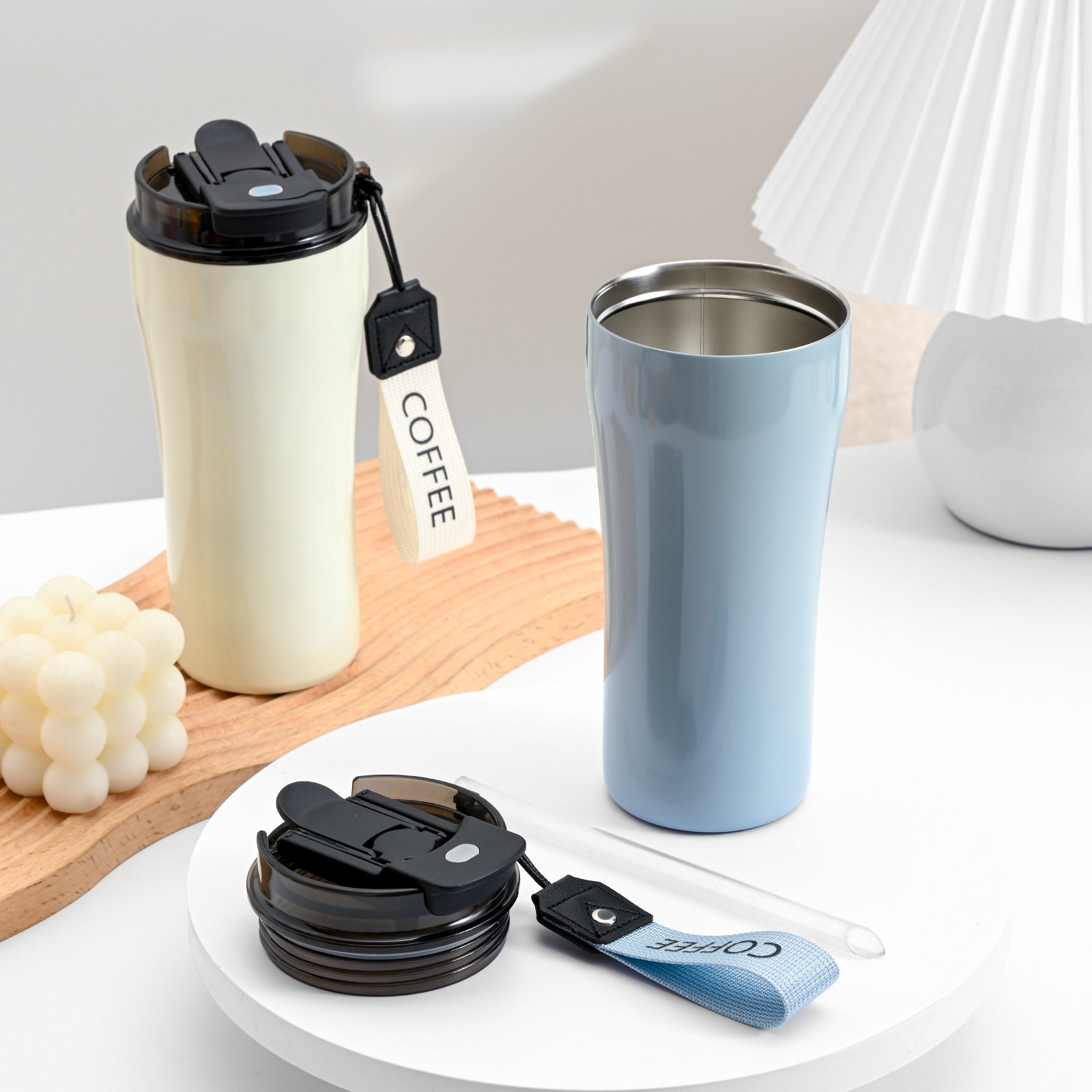
For hot-coffee thermal retention, double-wall 304 stainless steel vacuum insulated is the engineering choice — it keeps 90 °C coffee above 60 °C for 6–8{} hours. Single-wall aluminum is not vacuum insulated and loses heat rapidly. If your program must print “keeps coffee hot”, specify stainless steel.
Is aluminum or stainless steel better for a cold-water sport bottle?
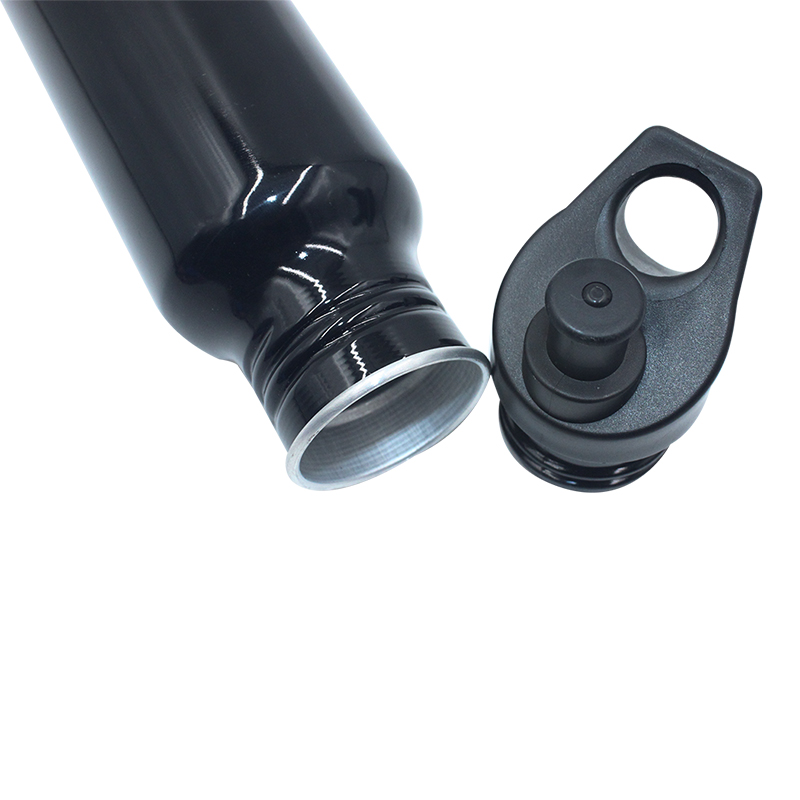
For cold-water sport applications, single-wall aluminum is typically preferred — it is roughly 50% lighter than equivalent stainless steel, costs less per unit, and the lack of insulation is irrelevant for cold beverages. Sunsum’s 750ml customized aluminum sport bottle is the standard specification for cycling and team-sport giveaways.
What is the BPA status of Sunsum aluminum and stainless steel bottles?
All Sunsum aluminum bottles use a BPA-free internal liner (epoxy, acrylic, or polyester depending on use case), compliant with FDA 21 CFR 175.300 and EU 1935/2004. All Sunsum stainless steel bottles are unlined (304 SS is food-contact safe without coating) and inherently BPA-free.
Which material is more recyclable?
Both are highly recyclable. Aluminum can be recycled indefinitely with about 5% of the energy required for primary production, and approximately 75% of all aluminum ever produced is still in use. Stainless steel is also 100% recyclable with about 60% recycled content in the average new SS 304 product. Both materials earn sustainability points; aluminum’s closed-loop recycling rate is slightly higher per industry data from the Aluminum Association.
Which material is more dent-resistant?
Stainless steel 304 has roughly 3× the yield strength of aluminum alloy 3003 (215 MPa vs 75 MPa typical). In practice, an empty stainless steel bottle survives a 1.2 m drop onto concrete without permanent deformation; an empty aluminum bottle typically dents at the same drop height. Both are tougher when filled with liquid.
What is the MOQ for a Sunsum aluminum vs stainless steel bottle?
Aluminum bottles: 1,000-piece MOQ per design per size (custom logo). Stainless steel bottles: 500-piece MOQ for standard designs, 1,000-piece for custom finishes. Both sample lead times 7–10 days; bulk production 30–35 days.
Can I source both aluminum and stainless steel from the same factory?
Yes. Sunsum China operates separate production lines for aluminum impact-extrusion and stainless steel double-wall vacuum forming under the same QA system and the same Ningbo factory. Buyers can split orders across both lines with one point of contact, one QC team, and consolidated shipping.
Which material has lower shipping cost per piece?
Aluminum is significantly lighter (a 600ml bottle: ~120 g aluminum vs ~290 g double-wall stainless steel). For air freight and DDP shipments to overseas retail warehouses, the per-piece dimensional weight cost is roughly 30–40% lower for aluminum. Sea freight is less sensitive to weight; the difference narrows but remains in aluminum’s favor.
8. Engineering Sources and How to Verify
The numbers cited above are drawn from industry-standard reference data. Before finalizing any bottle specification, request the following third-party documents from your supplier:
- Liner migration test report — per FDA 21 CFR 175.300 — confirms the inner coating is food-safe at the intended use temperature.
- EU food contact compliance declaration — per EU Regulation 1935/2004 — required for European retail and import.
- Material certificate — for stainless steel: 304 vs 316 confirmation with mill certificate (see AZoM 304 grade reference); for aluminum: alloy 1100 vs 3003 confirmation (see Aluminum Association).
- Thermal performance test report — for vacuum insulated SS bottles, filled with 95 °C water, measured at 1, 3, 6, 12 hours.
9. Closing Recommendation
The aluminum vs stainless steel choice is not a binary “better/worse” — it is a series of trade-offs that map to your specific program. If your OEM/ODM priorities are light weight, low unit cost, and full-color graphics, aluminum is the answer. If your priorities are thermal retention, premium hand feel, and minimal documentation steps, stainless steel is the answer.
Many Sunsum clients run split programs: aluminum for high-volume cold-drink promotions, stainless steel for premium hot-coffee lines. Both lines share the same Ningbo factory, the same QA system, and the same custom logo capabilities. For samples, MOQ clarification, or a custom proposal tailored to your program, contact our Sunsum China sales team. Sample lead time 7–10 days; bulk production 30–35 days.
Claire
Daily consumer goods specialist at Sunsum China, a professional manufacturer of custom aluminum water bottles, insulated tumblers, sports bottles, and drinkware. Expert in OEM/ODM custom manufacturing — from logo printing to color customization — helping global brands and retailers source premium, BPA-free drinkware with confidence. Dedicated to delivering functional, stylish products at competitive factory-direct pricing.
FDA 21 CFR 175.300 · Aluminum Association — Sustainability · AZoM — Stainless Steel 304 Properties · EU Regulation 1935/2004
Post time: Aug-07-2026