
A four-method by five-dimension decision matrix for custom logo water bottle printing — laser engraving, silk screen, UV printing, and heat transfer — with a 30-second brand procurement snapshot and a 12-question checklist for sourcing managers.
Why Custom Logo Printing Is a Sourcing Decision, Not a Decoration Choice
For most brand and procurement teams, the conversation about custom logo water bottles starts with the artwork and ends with the artwork. A logo file is sent to a factory, the factory recommends a print method, samples are approved, and the order ships. This comfortable workflow usually produces an acceptable bottle — but it leaves the brand exposed to four predictable failure modes that show up only after the order is in the field.
The first failure mode is method-substrate mismatch. A factory may default to UV printing because it is fast, even when the substrate is bare stainless steel and UV ink will not bond durably without a special primer. The samples look fine; the production run does not. Six months into the field, the logo is flaking and the brand is facing a quality complaint or a recall.
The second is method-use mismatch. A promotional product buyer specifies a full-color photo-realistic logo and the factory recommends heat transfer sublimation because it is the cheapest way to deliver that look. The samples are beautiful. The bottles go into a corporate fitness-gift program. The first dishwasher cycle clouds the polymer coating. The brand cannot run the bottles through any commercial dishwasher without destroying the logo.
The third is MOQ-tooling mismatch. A startup brand wants 200 bottles with a custom logo. The factory recommends silk screen because it is what the factory prefers. The setup cost amortized over 200 units doubles the unit cost and the brand cannot afford the order, or the brand proceeds and the unit cost blows the budget. A method such as laser engraving or UV printing, with much lower setup cost, would have produced the same logo at a viable per-unit cost at 200 units.
The fourth is artwork-method mismatch. A brand has a thin-lined logo with small text and the factory recommends laser engraving on stainless steel. The samples show the logo clearly. Production runs at speed and the laser power, optimized for throughput, slightly under-engraves the thin lines. The field bottles have partially illegible small text.
All four failure modes share a single root cause: the print method was chosen by the factory after the artwork was already finalized. The fix is to choose the print method before finalizing the artwork, the substrate, and the run size. The matrix below is that decision tool.
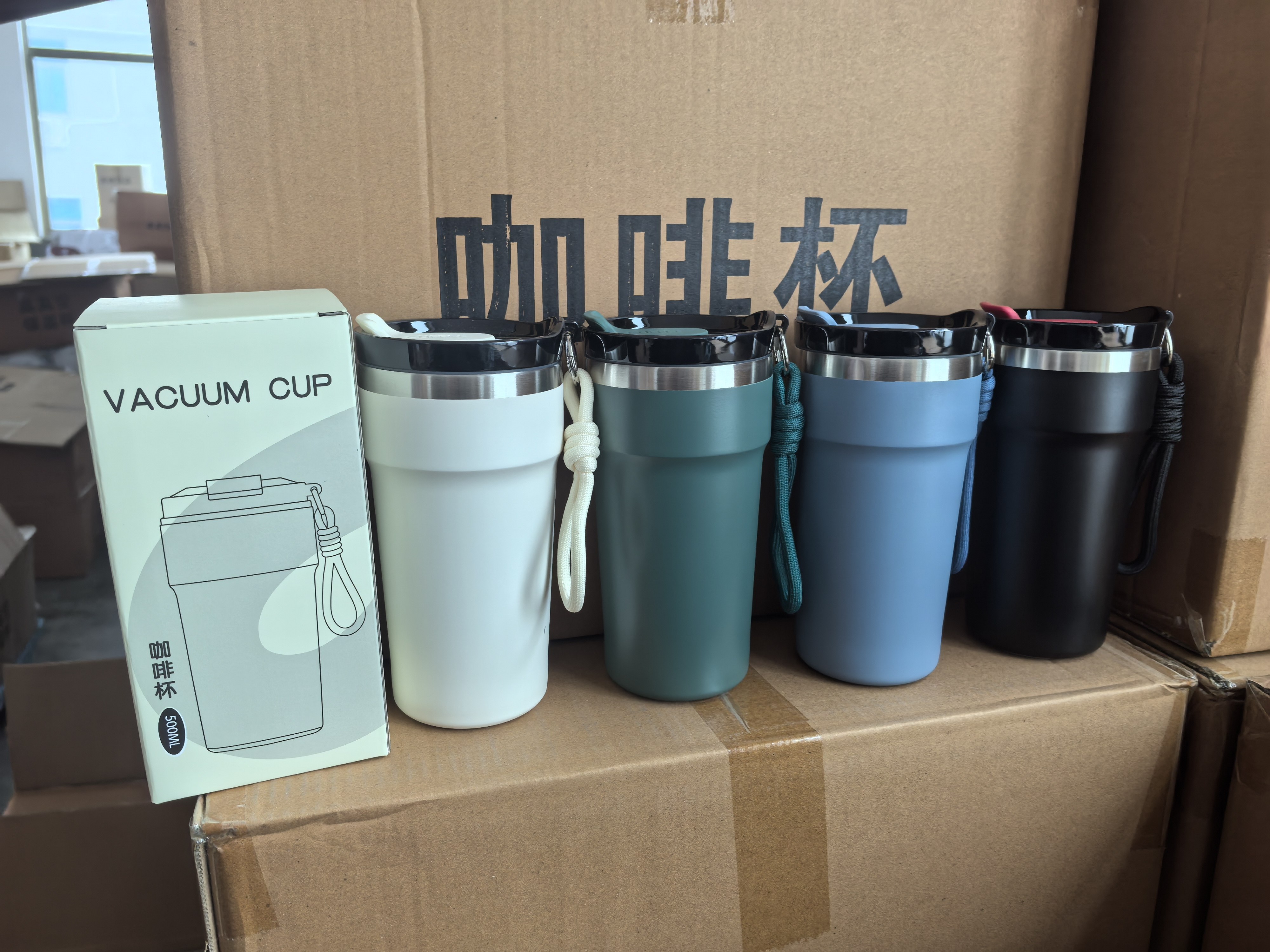
The brand’s spec sheet should include a print method decision alongside the substrate, color, and accessory decisions. Stainless steel tumbler blanks, 500ml custom powder coated stainless steel travel mug with handle strap and flip lid configurations, and other Sunsum China blanks all support multiple print methods. To discuss which method fits your project and to get a quote and samples, the Sunsum export team can run the matrix below against your logo file and target run size.
The Four-Method by Five-Dimension Decision Matrix
The matrix below is the working tool for the brand or sourcing manager. Rows are the four print methods covered in this guide. Columns are the five dimensions that drive the brand’s choice: substrate, logo complexity, run size, durability, and unit cost. Each cell is the dominant behavior of the method on that dimension, and the bottom row is the dominant brand scenario where the method is the strongest fit.
| Print Method | Best Substrate | Logo Complexity | Run Size Sweet Spot | Durability | Per-Unit Cost Profile |
|---|---|---|---|---|---|
| Laser Engraving | Bare stainless steel, bare aluminum (also titanium, brass, anodized aluminum) | Simple line logos, monograms, typography; thin lines can be fragile | 50 to 50,000+ units; low setup cost, linear scaling | Permanent. Cannot peel or fade. Becomes part of the bottle. | Low setup, mid per-unit; competitive at small to medium runs |
| Silk Screen Printing | Stainless steel, aluminum, plastic, glass, ceramic with compatible ink | 1 to 4 spot colors; Pantone-matched; flat vector logos | 500 to 100,000+ units; screen setup cost pays off at high volume | High with proper cure. Dishwasher-safe inks available. | Higher setup, lowest per-unit at high runs |
| UV Printing | Polymer-coated stainless steel, plastic sport bottles, aluminum with primer, wood, acrylic | Full color, photographic, gradient, fine text, complex artwork | 100 to 20,000 units; fast printer setup, no screen | Good for indoor and short-term outdoor use; hand-wash typically | Low setup, higher per-unit ink cost at very high runs |
| Heat Transfer / Sublimation | Polymer-coated stainless steel blanks, polyester-coated aluminum, plastic | Full color, photographic, all-over wrap, gradient | 100 to 50,000 units; transfer sheet cost amortizes | Vibrant but fade-prone under UV; hand-wash recommended | Low setup, mid per-unit; best for full-bleed artwork |
The matrix collapses to a single rule for most brand buyers: match the method to the substrate and the use environment first, then optimize the unit cost for the run size. The four method sections below explain why each method behaves the way it does on each dimension, and where the failure modes show up when the rule is ignored. For broader context on how drinkware decoration fits into the commercial printing industry and what promotional product standards apply to custom logo projects, the relevant industry bodies publish guidance that complements the matrix below. Brands sourcing promotional drinkware for the U.S. market should also note the U.S. Commercial Service export guidance and the UL safety standards that apply to consumer products in commercial use.
30-Second Brand Procurement Snapshot. Stainless steel or aluminum corporate or premium-gift project at any run size — laser engraving. One- or two-color logo at 1,000+ units with strict unit cost — silk screen. Full-color photographic logo on a polymer-coated bottle at 100 to 5,000 units — UV printing or heat transfer sublimation. The brand that runs this snapshot before sending the artwork saves itself from the four failure modes that show up when the method is chosen after the fact.
Laser Engraving — Permanent, Premium, Stainless-Steel-Only
Laser engraving uses a focused laser beam to remove or discolor a thin layer of the substrate surface, leaving a permanent mark that becomes part of the bottle. On bare stainless steel, the laser exposes the underlying metal tone, producing a darker, slightly recessed mark. On anodized aluminum, the laser removes the dye layer to expose the bare metal beneath. On bare aluminum without anodizing, the laser oxidizes the surface and produces a similar effect. On powder-coated stainless steel — like the Sunsum 500ml custom powder coated stainless steel travel mug with handle strap and flip lid — the laser cuts through the powder coat to expose the stainless steel beneath, leaving a clean, high-contrast logo against the colored background.
The dominant advantage of laser engraving is permanence. Because the mark is a physical change in the substrate rather than a deposited layer, it cannot peel, fade, wash off, or rub off under normal use. A laser-engraved logo on a stainless steel bottle will remain readable for the working life of the bottle, including dishwasher cycles, daily abrasion from bags and cup holders, and exposure to sun and skin oils. For corporate gifting, premium retail, and outdoor and sports positioning, this permanence is the strongest argument for the method.
The dominant limitation is substrate scope. Laser engraving works on metals and a small list of other materials (wood, leather, certain plastics), but it does not work on transparent coatings, glass without a marking compound, or pure plastic bottles. The brand that specifies laser engraving should specify a metal substrate at the same time.
The second limitation is logo complexity. Laser engraving produces clean, sharp lines on simple vector logos. Thin lines under 1 mm and small text under 6 pt are fragile under aggressive laser parameters, and complex photographic or gradient logos are not feasible because the laser is a binary tool at each pixel. Brands with detailed, multi-color, or photographic logos should not specify laser engraving as the primary method.
The third consideration is the per-unit cost curve. Laser engraving has a very low setup cost (a digital file and a fixture), so it scales linearly from very small runs to very large runs. At small to medium runs (50 to 5,000 units), laser engraving is typically the lowest total cost option for a simple logo. At very large runs (50,000+ units), silk screen printing on the same substrate can beat the laser per-unit cost because the laser cycle time is the limiting factor.
Silk Screen Printing — Versatile, Color-Limited, High-Volume Friendly
Silk screen printing (also called screen printing or serigraphy) pushes ink through a fine mesh screen onto the substrate, with a stencil defining the printable area. Each color in the logo requires a separate screen and a separate printing pass, so the cost and complexity scale with the number of colors. For one- or two-color logos on stainless steel, aluminum, plastic, or glass, silk screen is the workhorse method of the promotional drinkware industry.
The dominant advantage of silk screen printing is per-unit cost at high runs. The screen setup is a fixed cost, but the per-unit ink and labor cost is low, so the unit cost drops steeply as the run size grows. For a brand running 5,000 or 50,000 bottles with a one-color logo, silk screen is usually the most cost-efficient method on the market. The ink is also fully compatible with commercial dishwasher cycles when properly cured, and Pantone-matched spot colors are straightforward to specify.
The dominant limitation is color count. Each color requires its own screen and its own printing pass, and each pass adds a registration step. A four-color logo on a curved bottle surface requires careful alignment and is the practical upper limit for most silk screen operations. Photographic logos with gradients are not feasible in pure silk screen; full-color work requires a different method.
The second limitation is artwork lock-in. Once a screen is made, the artwork cannot be changed without remaking the screen, and the per-unit cost assumes the full run uses the same artwork. For brands running a one-off bottle or a small pilot run, the screen setup cost can dominate the total cost; for brands running a multi-SKU line with frequent artwork changes, the cumulative screen cost can become significant.
The third limitation is substrate geometry. Silk screen works best on flat or gently curved surfaces. Highly curved surfaces — narrow bottle necks, handles, complex lid geometries — are difficult to print with consistent ink deposition, and the visible result often shows uneven coverage at the edges. For complex geometries, pad printing is often a better fit, though pad printing is outside the scope of this guide. Brands that want a dishwasher-safe silk screen logo on stainless steel should also specify high-temperature-cure ink in the RFQ and confirm the cure temperature with the factory.
For a brand sourcing a corporate-gift or retail program with a one- or two-color logo on stainless steel at a run size above 1,000 units, silk screen printing is usually the right default method. The brand should specify the substrate, the ink cure requirement, the Pantone color references, and the artwork file format (vector, color-separated) in the RFQ, and confirm dishwasher durability with the factory before approving production samples. For drinkware-specific ink-cure and substrate-preparation standards, the TAPPI material standards provide cross-industry reference points for polymer coatings and ink bonding, and Intertek testing services can run accelerated dishwasher and abrasion tests on the finished decorated bottle.
UV Printing — Full-Color, Photo-Realistic, Small-Batch Capable
UV printing uses ultraviolet-cured inkjet technology to print directly onto the substrate. The printer deposits liquid ink onto the surface and immediately cures it with a UV lamp, producing a hard, dry finish that bonds to the substrate without heat. UV printing accepts full-color, photographic, gradient, and fine-detail artwork in a single print pass, with no screens, no plates, and minimal setup time.
The dominant advantage of UV printing is artwork flexibility. A UV printer can reproduce a multi-color photographic logo, a gradient, fine text, a complex illustration, or a small photo-realistic graphic in a single pass. For brands that have a detailed or full-color logo and want to see it reproduced faithfully on the bottle, UV printing is the closest one-to-one match between artwork file and finished product.
The dominant advantage at small to medium runs is setup economics. A UV printer does not require a screen, a plate, or a transfer sheet; the artwork file is sent directly to the printer, and the printer is running within minutes. For a brand running 100 to 1,000 units with a full-color logo, UV printing is usually the lowest total cost option, because there is no screen or plate cost to amortize.
The dominant limitation is substrate preparation. UV ink bonds well to polymer-coated stainless steel, plastic, wood, acrylic, and certain prepared metals. On bare stainless steel or bare aluminum, UV ink does not bond durably without a primer or pre-treatment, and the resulting mark can flake or scratch off in heavy use. The factory must specify a primer pre-treatment for bare metal, and the durability should be confirmed with accelerated wash and abrasion testing.
The second limitation is dishwasher and outdoor durability. UV-cured ink is cured to a hard finish, but the bond to the substrate is mechanical rather than chemical, and repeated high-temperature dishwasher cycles can degrade the bond at the ink-substrate interface. Most UV-printed bottles are specified as hand-wash only. For outdoor and sports applications with sustained sun exposure, UV printing should also be specified with an outdoor-rated ink and confirmed with the factory’s accelerated UV exposure test data.
For a brand sourcing a small to mediumrun with a full-color or photographic logo on a polymer-coated bottle, UV printing is the right default method. The brand should specify the substrate coating (or request a primer pre-treatment for bare metal), the artwork file format (300 DPI raster at actual print size), and the wash specification (hand-wash only) in the RFQ, and confirm the durability with the factory’s test data before approving production samples.
Heat Transfer / Sublimation — Photo-Realistic, Polymer-Coated, Fade-Prone
Heat transfer printing (and its close cousin, dye sublimation) uses a printed transfer sheet or a printed sublimation paper that is applied to the substrate under heat and pressure. The heat activates the dye or ink, which sublimates into the polymer coating or polymer substrate and becomes part of the surface. The result is a fully embedded, full-color, photographic image that cannot be felt by touch and cannot peel because it is now part of the polymer.
The dominant advantage of heat transfer and sublimation is image richness. For all-over wrap artwork, photographic gradients, and complex multi-color imagery that silk screen cannot reproduce and UV printing cannot match on bare metal, heat transfer sublimation is the strongest method. The image is continuous tone, the colors are vibrant, and the artwork wraps the bottle without visible seams. Brands that want a photo-realistic image or a full-bleed brand scene on a bottle usually end up at sublimation.
The dominant limitation is substrate requirement. Heat transfer and sublimation require a polymer or polyester coating on the substrate. Stainless steel blanks that are sold as “sublimation-ready” come from the factory with a factory-applied polymer coating. Bare stainless steel cannot accept sublimation ink directly; the brand must specify a sublimation-ready blank or accept that the factory will apply a coating as a pre-treatment step, which adds cost and lead time.
The second limitation is durability under UV and heat. The sublimated dye is embedded in the polymer, but the dye itself is sensitive to prolonged UV exposure and to high-temperature washing. A sublimated bottle left in direct sunlight for months will fade noticeably; a sublimated bottle run through a commercial dishwasher will degrade faster than a silk screened or laser engraved bottle. Most sublimated bottles are specified as hand-wash only and as indoor or short-term outdoor use only.
The third consideration is the transfer step. Heat transfer and sublimation add a process step after the bottle is formed and coated, which extends lead time and adds a per-unit cost. The cost is usually lower than UV printing at high runs and higher than silk screen at very high runs, but it depends heavily on the specific factory’s process. The brand should ask for the per-unit cost at the target run size and confirm the lead time.
For a brand sourcing a full-color photographic or all-over wrap design on a polymer-coated bottle for retail, e-commerce, or short-term promotional use, heat transfer sublimation is the right method. The brand should specify the substrate coating, the artwork file format (300 DPI raster at actual print size, mirrored for transfer), the wash specification (hand-wash only), and the use environment (indoor or short-term outdoor) in the RFQ, and confirm the expected fade profile with the factory’s accelerated UV exposure test data.
12-Question Brand Procurement Checklist
Use this list before issuing a purchase order or signing a multi-property rollout agreement. Each question maps to a procurement decision point that determines which of the four methods is the right fit for the project.
- What is the substrate material of the bottle blank (bare stainless steel, bare aluminum, polymer-coated stainless steel, plastic), and which of the four methods does the substrate accept?
- How many spot colors does the logo contain, and is the artwork vector or photographic? (This decides between silk screen, laser, and UV/sublimation.)
- What is the target run size per SKU, and which method has the best per-unit cost at that run size?
- Is the bottle expected to be dishwasher safe, hand-wash only, or single-use? (This determines whether UV and sublimation are even viable.)
- Will the bottle see outdoor UV exposure, and for how long? (This determines whether UV printing and sublimation need an outdoor-rated specification.)
- What artwork file format can the brand supply (vector for laser and silk screen; 300 DPI raster for UV and sublimation), and is the artwork locked or still evolving?
- Does the logo contain thin lines under 1 mm or small text under 6 pt, and is laser engraving a viable method for that artwork?
- What Pantone references apply, and does the factory have those inks in stock or do they need to be custom mixed?
- Does the factory have a documented cure or pre-treatment process for the chosen method on the chosen substrate, and can they share accelerated test data?
- For laser engraving, what is the cycle time per bottle, and is the cycle time compatible with the target run size and lead time?
- For UV or sublimation, does the factory apply the polymer coating in-house or source pre-coated blanks from a separate supplier?
- What is the warranty or replacement policy if a printed logo fails durability testing within the first 90 days of use?
If questions 1, 2, 4, and 9 cannot be answered with documented evidence from the factory, the procurement is not yet ready to commit. These four questions map directly to the substrate-method fit, the artwork-method fit, the use-method fit, and the durability evidence — all of which are the four failure modes covered in the second section of this guide.
Sourcing custom logo water bottles for a brand, retail, or promotional program?
Ningbo Sunsum (Ningbo Shengsheng Commodity Co., Ltd.) manufactures custom logo water bottles across all four printing methods covered in this guide — laser engraving, silk screen printing, UV printing, and heat transfer sublimation. Our stainless steel tumbler line and the 500ml custom powder coated stainless steel travel mug with handle strap and flip lid support all four methods, with Pantone color matching and full OEM/ODM artwork services. To run the four-method by five-dimension matrix against your logo file and target run size, and to get a quote and samples with your specified print method, contact our export team with your substrate preference, logo file, run size, and use environment.
Frequently Asked Questions
Which printing method is best for custom logo water bottles?
There is no single best method — the right choice depends on the substrate material, logo complexity, run size, and use environment. For stainless steel or aluminum with a corporate or premium-gift positioning, laser engraving is usually the strongest choice. For full-color photographic logos on a polymer-coated or plastic bottle, UV printing or heat transfer sublimation is the stronger choice. For simple one- or two-color logos at high runs on stainless steel, silk screen printing remains the most cost-efficient. The 4-by-5 matrix in this guide is the working tool.
How long does laser engraving last on a stainless steel bottle?
Laser engraving on stainless steel or aluminum is permanent — it does not fade, peel, or rub off under normal use, because the laser alters the surface of the metal itself. A laser-engraved logo will remain readable for the working life of the bottle, including dishwasher cycles and daily abrasion from bags and cup holders.
Can UV printing go on stainless steel water bottles?
Yes, with a primer pre-treatment, but it is less durable than laser engraving under heavy dishwasher or outdoor use. For full-color photographic logos on stainless steel, a sublimation-coated blank plus heat transfer sublimation is usually a better technical fit than direct UV printing on bare metal.
What is the MOQ for custom logo water bottles?
Typical MOQs depend on the printing method. Silk screen commonly starts around 500 to 1000 units per SKU. Laser engraving can start as low as 50 to 200 units. UV printing typically starts around 200 to 500 units. Heat transfer sublimation commonly starts around 100 to 300 units for pre-coated blanks.
Which printing method is dishwasher safe?
Laser engraving on stainless steel and silk screen printing with high-temperature ink on stainless steel or ceramic are both fully dishwasher safe. UV printing and heat transfer sublimation are typically hand-wash only. For brands marketing dishwasher-safe claims, the method choice should be made early in the spec, not after artwork is finalized.
What file format do I need for custom logo printing?
For laser engraving, supply a vector file in AI, EPS, CDR, or SVG plus a raster preview. For silk screen, supply color-separated vector files in AI or EPS with Pantone references. For UV printing and sublimation, supply a 300 DPI raster file in PNG, TIFF, or PDF at the actual print size. Supplying Pantone references for spot colors is the cleanest workflow.
Post time: Sep-01-2026